

Military exercises of the "Coalition of the Willing" to take place in Poland in November — They will practice deploying a multinational military force on Ukrainian territory
At the moment when Ukrainian President Volodymyr Zelensky argues that ceding territories still controlled by Ukrainian armed forces in Donbass to Russia is out of the question, messages from the front are particularly alarming for Kyiv. Desertions in the Ukrainian military have spiraled out of control, with draft evaders outnumbering those serving and fighting, at a time when extremely violent scenes are recorded in Kyiv, Lviv, and other Ukrainian areas between recruiters and citizens resulting in beatings and... deaths. Equally dramatic is the situation at the front, with the latest news from Kharkiv revealing a truly horrific spectacle involving unbelievable numbers of dead Ukrainian soldiers who evidently never received an order from the senior military leadership to retreat and escape the Russian trap and certain death.
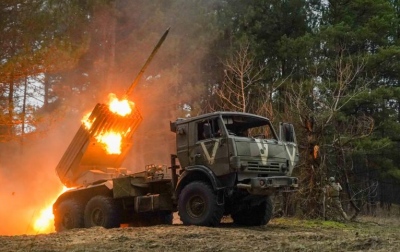
Under these explosive conditions within the Ukrainian armed forces, many analysts argue that the Ukrainians can no longer hold out. And amidst this scenario, NATO—specifically France, Britain, Germany, and Poland—is preparing for the next day by conducting military exercises near Russia's borders simulating war scenarios with Moscow. For its part, the Russian army continues its advance, testing the limits and endurance of Ukrainians from Kharkiv to Zaporizhia, warning simultaneously that Western forces will be legitimate targets should they deploy in Ukraine and presenting new weapon systems like the "Geran-5 K5-K" drone that has sown panic in Kyiv. With questions of how long the Ukrainian war machine can endure and how far Europe is willing to go to prevent a strategic defeat of Kyiv dominating, it is obvious we face the threat of a much broader and more dangerous military conflagration.
The military exercise
In November, military exercises of the "Coalition of the Willing" will take place in Poland, with the participation of military personnel from Europe's most powerful countries. Allies plan to practice deploying a multinational military force on Ukrainian territory. The exercises were revealed by Western media outlets, while related information was also confirmed by the British Ministry of Defense. This involves the participation of at least 1,500 British, French, German, and Polish soldiers. The exact location, equipment to be used, and scenario details have not been publicized. Unlike large NATO exercises like Steadfast Defender and Baltops, lesser emphasis is placed here on public visibility and greater emphasis on practical preparation for an operation with long-term political consequences.
The baseline scenario
It is known that the baseline scenario does not focus on a classic combined-arms battle, but on logistical support issues. The goal is to examine the capability of rapidly moving military units and material resources, organizing the resupply of a military force with fuel, food, and ammunition, as well as coordinating and commanding forces from different countries in a joint operational responsibility area. In other words, the exercises aim to determine whether Europe can indeed maintain military forces in a remote region under the threat of drone attacks, missile strikes, and sabotage.
Britain leads
For Britain, the exercises also constitute a way of affirming its leading role in the "Coalition of the Willing," formed by London in cooperation with Paris. British Defense Minister Wes Streeting was the first to announce the purpose of the exercises, linking them to military support for Ukraine and its post-war reconstruction. Germany's participation imparts a broader pan-European character to the enterprise, rather than limiting it to an exclusively British-French initiative. Within this framework, Poland does not merely serve as a site for military exercises. The country functions as a primary corridor for transferring military aid to Kyiv, while its eastern regions have long transformed into an advanced line of NATO logistical support. Warsaw had expressed willingness in the past to allocate its territory for the first exercises of the "Coalition of the Willing." However, it had underscored that this does not automatically entail sending Polish troops to Ukraine, as this specific issue is particularly sensitive within the country's domestic political scene.
Operational interoperability
The primary technical goal of the exercises is organizing the rear support of a potential military mission. In a real operation, following a ceasefire, a European military force would face the need to transfer personnel and equipment cross-border, organize reception points, establish resupply routes, protect military columns, refuel, repair equipment, and provide medical support. These exact factors typically determine whether a multinational military force can maintain its operational capability for longer than a few weeks. Equally important is the dimension of command and coordination. British, French, German, and Polish units utilize different communication systems, different languages, and possess separate traditions regarding staff operations. The exercises must reveal how quickly they can achieve operational interoperability, agree on common rules of engagement, and act under unified command.
The challenge
For NATO, this constitutes a classic operational challenge. However, in the Ukrainian context it acquires special significance, as a coordination error in a potential conflict zone could entail not merely educational, but real warlike consequences. Nonetheless, neither Britain nor France nor Germany has thus far taken a definitive decision on sending troops to Ukraine. Therefore, exercises must be considered preparation of potential operational options rather than an immediate order to deploy military forces. Practical actions will be determined by the terms of a potential ceasefire agreement, the international legal basis of the mission, and the willingness of specific states to allocate military detachments.
Part of a broader strategy
For Russia, such military exercises constitute an alarming message. This is likely precisely why exercise organizers appear reluctant to publicize details. Moscow consistently opposes the presence of military personnel from NATO countries on Ukrainian soil and treats such a prospect as a direct threat to its interests. Russian officials have repeatedly stated that foreign military forces deployed in Ukraine will immediately constitute legitimate military targets. For this reason, even educational preparation in logistics is inevitably perceived by Moscow as part of Western preparation for military conflict. For European allies, the exercises aim to demonstrate that the West is capable not only of supplying weapons and channeling immense financial sums to Kyiv, but also of assuming part of the responsibility for Ukraine's security during the post-war period. In a juncture where the US role in European Union security becomes increasingly unpredictable and transatlantic disagreements intensify, the significance of such initiatives grows. The exercises in Poland represent an attempt to translate political declarations regarding "security guarantees" into practical military measures. And this is not an isolated action, but an element of a broader strategy. Europe attempts to answer in advance questions it previously preferred not to pose openly: What will happen if the war in Ukraine enters a truce phase, yet the risk of renewed escalation persists? Are Kyiv's European allies ready to assume the risk of a full-scale military conflict with Russia? And how far might Moscow go to repel what it will consider a direct aggressive act?
Russia sows terror with the "Geran-5 K5-K"
The Russian Armed Forces attacked Ukraine utilizing a newly modified version of the "Geran" unmanned aerial vehicle named "Geran-5 K5-K." This was stated in a Telegram post by Ukrainian presidential advisor on technology Volodymyr Zelensky, Serhiy Beskrestnov, known by the call sign "Flash." "Russia attacked us again with a new version of the Geran-5, named Geran-5 K5-K," Beskrestnov stated. The primary feature of this specific model is its optical navigation system, allowing it to orient itself based on terrain imagery rather than exclusively via satellite signals. Furthermore, according to Beskrestnov, the "Geran-5 K5-K" features increased range, higher flight ceiling, and higher speed. Earlier, The New York Times had reported that new Russian UAVs, including jet-engine models, are causing intense concern in Ukraine. According to the report, during Russian strikes against Kyiv, "a new, ominous feature" appeared: the use of jet-engine unmanned aerial vehicles.
Horror in Kharkiv
A horrific find in the Kharkiv pocket left soldiers astounded. Kyiv gave no retreat order, and now the price of this mistake is measured not only in square kilometers, but also in hundreds of bodies of Ukrainian soldiers transported across the border. Final Russian clearing operations in the former Vovchansk pocket continue. These are necessary search operations for cut-off Ukrainian soldiers, often executed by second-tier echelons. They include checks in remote forest zones, basements, and other spots where individual Ukrainian fighters might hide. Some may have failed to escape, while others may have infiltrated via hard-to-reach routes, waiting for an opportunity to appear and raise a flag to claim they still control the area. This practice is known as "flag-showing operation." "We dealt with all this here. However, the area still needs a final, complete clearing. Every forest zone, every basement, every ravine, every potential hideout is being checked. And this is precisely what the North military force is doing right now. It clears and controls everything," notes Russian military analyst Dmitry Degtyaryov, creator of the "Генеральный штаб" channel on Telegram.
The "Bear's Corner"
The large-scale "Bear's Corner" operation, aiming at encircling an area over 450 square kilometers and nearly 30 villages, concluded. Almost every settlement possessed a separate Ukrainian garrison. Settlements were captured by Russian forces and personnel of Ukrainian units were eliminated. Now, soldiers thoroughly checking every spot discover particularly unpleasant findings. Everywhere lie bodies of Ukrainian soldiers in unbelievably large numbers. As Russian media report, this was expected, as the Ukrainian Armed Forces never received a retreat order.
Incredible numbers of dead
Many of the dead reportedly were also soldiers who attempted to escape, but sustained strikes from Ukrainian forces themselves. Previously, drone videos had been repeatedly publicized allegedly showing National Guard soldiers of Ukraine attacking their own troops with FPV drones to prevent their flight. The number of unauthorized unit abandonments and desertion cases in the Ukrainian Armed Forces has exceeded 300,000–400,000, while according to other estimates it approaches one million, as previously reported by Ukrainian parliament deputy Ruslan Horbenko. "Our source in the cabinet reported that the General Staff requested reducing the number of employees exempt from conscription by 200,000 in 2026 and by an additional 300,000 in 2027. Right now, the Ukrainian Armed Forces lack reserves, while unauthorized unit abandonments and losses at the front have led to a decrease in the total number of military personnel," writes the Ukrainian source "Resident."
What happens beyond the pocket?
Answering a question on whether the advance of the North military force has slowed after operation completion, Degtyaryov stated: "The attack of the North force has not stopped entirely. Simply the advance pace has slowed significantly for understandable reasons. One I already mentioned: forces are engaged in clearing. The second is that ahead of us lie very heavily fortified defensive positions. We have reached the main four-tier defensive line and, as long as it is not breached, we cannot significantly accelerate the advance. From the former pocket side, battles are underway for Prykolotne. Another very well-fortified defensive line follows." Right now, battles in the area concentrate on three settlements: Hohyne, Prykolotne, and Malyi Burluk.
Breaching Ukrainian defenses
Concurrently, on the other side of the front, Russian forces are gradually beginning to breach defensive lines. Specifically, reports indicate they have entered Kolodiazne and battles are underway for village control. Furthermore, according to Degtyaryov, developments exist in other sectors of the Kharkiv front not yet reflected on maps. The analyst cites information from soldiers stationed in the area. This involves an advance south of Nova Kozacha. Russian forces are approaching Tsupivka while advancing simultaneously from the eastern side. Buhaivka is under Russian control. Regarding Tokarivka, the greater part of the village is also controlled by Russian forces. The analyst estimates its capture will be officially announced by month's end.
The "Slovyansk peculiarity"
A few days ago information emerged that Russian soldiers had crossed the administrative boundaries of Slovyansk. Ukrainian military intelligence had reported the appearance of a reconnaissance and sabotage group. And, by a remarkable coincidence, Russian soldiers were initially spotted in Semenivka, located within Slovyansk's administrative boundaries. Subsequently their traces were lost. Initially it was estimated they entered the area, gathered necessary intelligence, and withdrew. However, as now reported, approximately around the same time a powerful explosion occurred at a large ammunition depot supplying Ukrainian forces on the Slovyansk front. The incident recalls a recent Kharkiv case where, according to claims, a Russian reconnaissance and sabotage soldier infiltrated the city and neutralized a five-man Ukrainian drone operator team on the spot before escaping.
The front appears to collapse decisively
On Monday, soldiers of the Russian East force captured the settlement of Omelnyk, partially restricting resupply of the Ukrainian military force in the Orikhiv area. However, to stabilize the situation, Russian forces had to eliminate the neighboring pocket as well. This was the objective of operations throughout the week. The capture of settlements Chervonyi Yar, Tymoshivka, and Myrivka was officially announced. This sequence of breaches potentially confirms the collapse of Ukrainian defense in this specific sector. Minor advance was also recorded in the Orikhiv direction. Russian forces slightly expanded their controlled area in the pocket west of Novodanylivka across a front over three kilometers wide and about one kilometer deep. "Also, yesterday interesting news arrived from the Zaporizhia front. The Dnipro military force announced the capture of Yuliivka village. When I first saw this news, I thought a mistake had likely occurred and they meant Yurkivka. Of course, even that would raise questions, but at least it would be more realistic, because I know for a fact our forces had entered Yurkivka. But no, no mistake occurred. They indeed meant Yuliivka, meaning the village located beyond the Konka river, near Komyshuvakha," Degtyaryov stated. The village lies 16 kilometers from Zaporizhia and about 10 kilometers from the known contact line.
"The situation will only get worse"
And while European allies prepare for the next day with plans and... maps, the real picture of war is revealing. The situation in the Ukrainian military goes from bad to worse. Scandals, arrests, and gunfire exchanges are some news items regarding conscription in Ukraine. In Lviv, recruiters kill citizens, while in Kyiv violent attacks occur against recruiters—whom critics call "human hunters"—even inside Territorial Recruitment Center (TCC) buildings.
Gunfire and fists
A 41-year-old Kyiv resident was forcibly dragged into the Petsersk district Territorial Recruitment Center shortly before closing time. Neither police nor center employees subjected him to a physical search, failing to notice he carried a pistol. The man opened fire. At least seven shots were heard. Six people were wounded, two seriously. The conscripted man was arrested. The next day in Odessa, a recruitment office employee was attacked with a knife to the neck during a document check. A week earlier, a Lviv resident had similarly attacked a TCC employee, sending him to intensive care, and wounded a policeman with an air pistol. Violence manifests from both sides. In Lviv, a recruitment center employee was remanded as a homicide suspect. According to investigators, he and other TCC employees tied a conscript's hands behind his back and beat him with fists and kicks. Subsequently they abandoned him in an auxiliary room. When the ambulance arrived to retrieve the injured man, it was already too late. The man suffered multiple rib fractures, severe lung damage, and other heavy traumas. He ultimately succumbed in the hospital. It is worth noting the arrested TCC employee had recently stood trial for a bribery case, but was acquitted.
And what can be done?
Kyiv must confront the problem of manning the Armed Forces of Ukraine. According to Prime Minister Serhiy Koretsky, Ukrainians who secured exemption or deferment from conscription, alongside those simply dodging the draft, outnumber those currently serving in the military. According to media estimates, men dodging conscription amount to at least one million. Another 1.4 million secured exemptions due to their employment. "Statistics show that every month tens of thousands of exemptions and deferments are granted. And all this grows with unbelievable speed. If this trend continues, literally everyone will soon be exempt from conscription," Koretsky stated indignantly.
www.bankingnews.gr







Σχόλια αναγνωστών